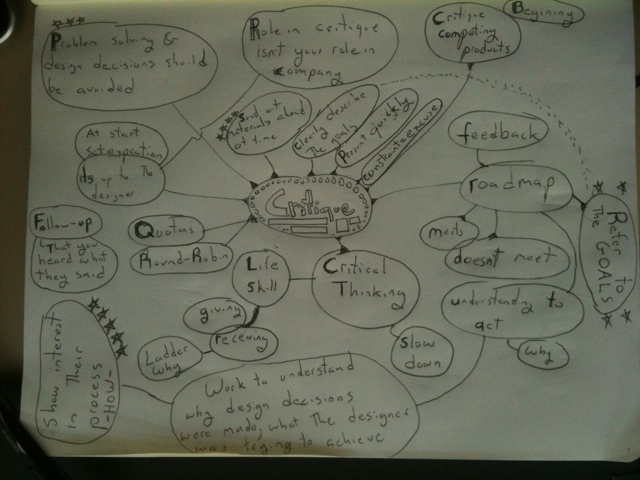
Visual notes: Discussing Design: The art of Critique by Adam Connor & Aaron Irizarry at IA Summit 2011
April 2nd, 2011Nate Silver Keynote at IA Summit 2011
April 1st, 2011
Visual notes from Design for RUDES by Rob Fay & Joanna Hunt
April 1st, 2011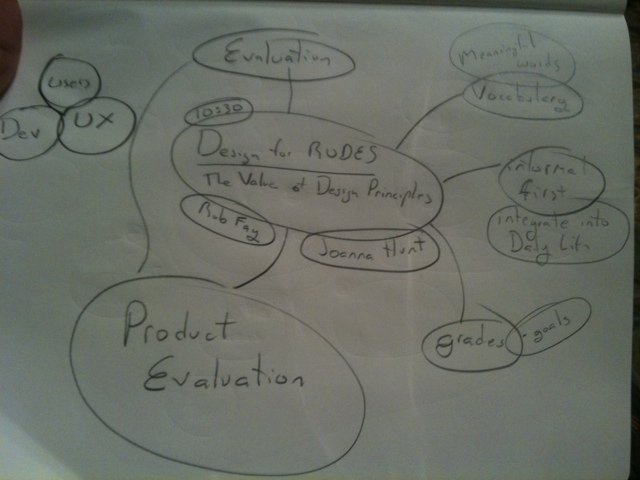
Evolution of Product Management?
March 30th, 2011At the the begining there is the
problem, then a
project, then a
product, then a
program, then a
portfolio
Dangers
- Don’t let problem projects become problem programs or portfolios. When you move up the chain, it needs to move from reactive to proactive (from current customers to prospective customers also.)
- Regularly review existing products and programs. If they aren’t most valuable – cut them. Too often the continue to suck resources beyond their value generation stage.
then
How to Show Loyalty to Your Customers
March 27th, 2011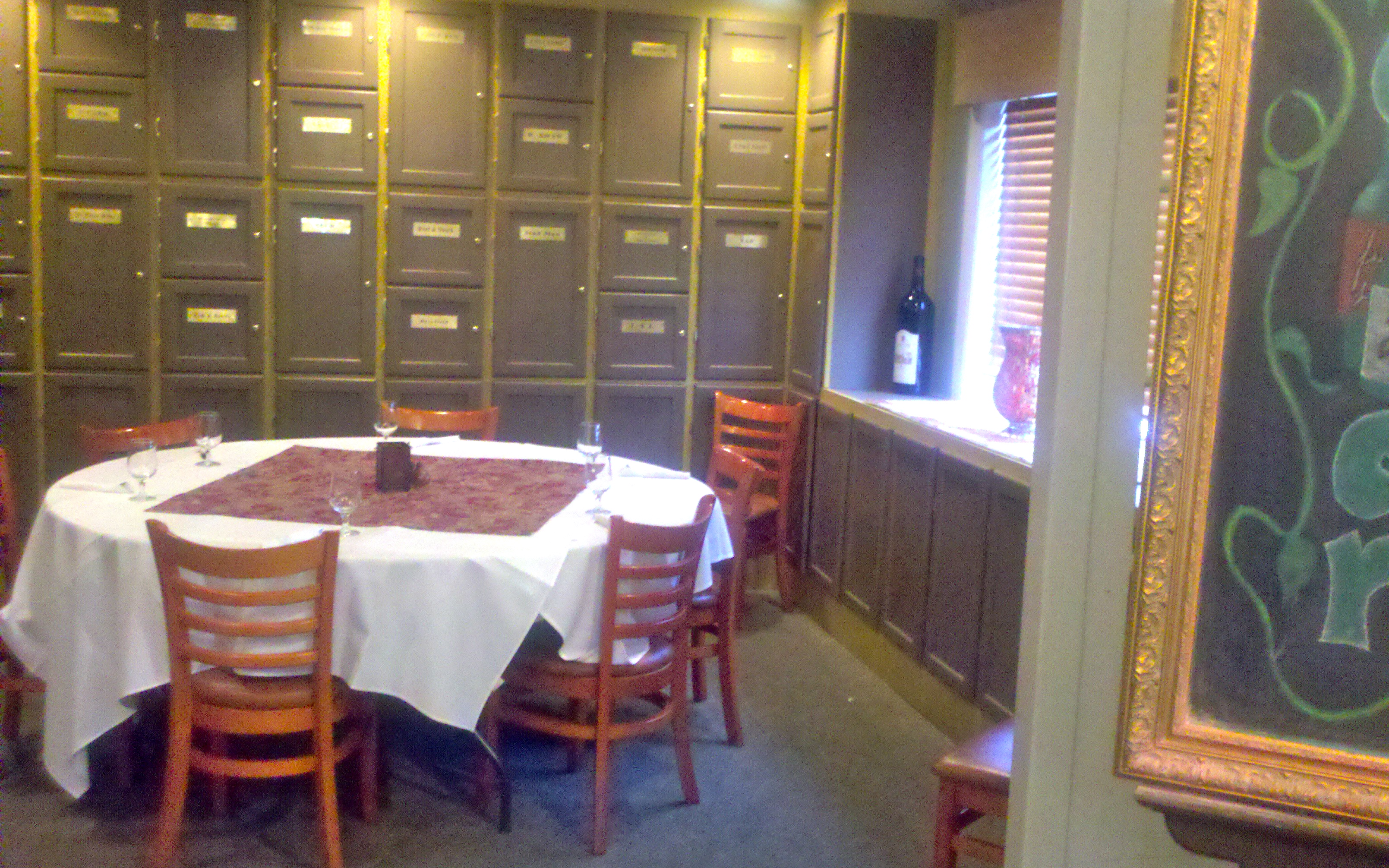
Here is a a good example of showing loyalty to your customers (Brand to Customer Loyalty). The Cellar Restaurant (in Camp Hill, PA) does this with their “wine lockers” that are labeled and personalized with their customers’ names on brass plates. This allows their customers to keep their wine on premises. Or as they put it “Hide your booze here … Ask your server about our locker rental.” It reminds me of the early days of coffee shops that keep their customers’ coffee mugs in easily accessible yet within everyone’s view right at the espresso counter.
See Also
Road that goes through the middle of a house
March 2nd, 2011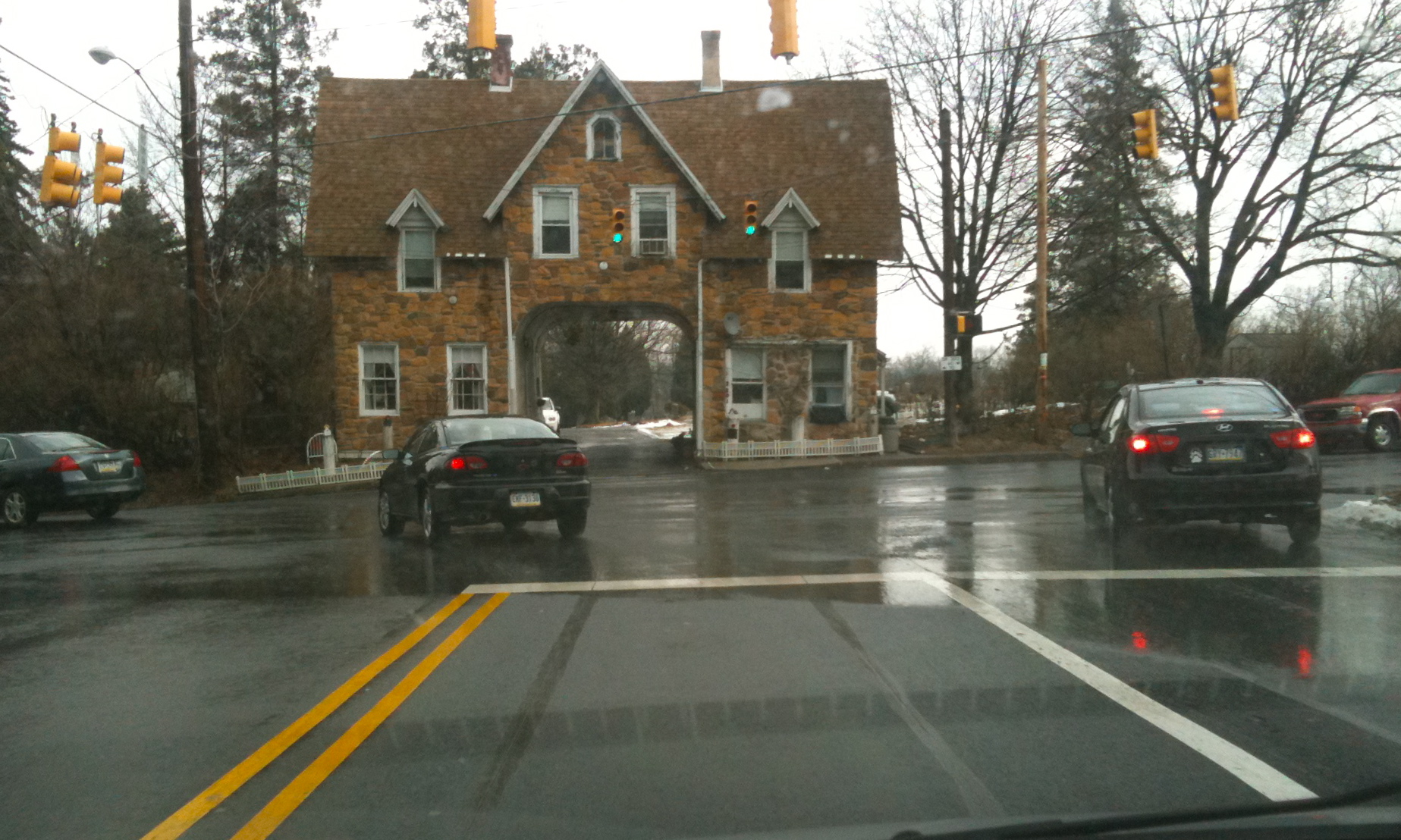
This is next to Prospect Hill cemetery in Harrisburg PA at the intersection of Market St and Kline Village. A road runs right through the center of the house. Now the road is the road to the cemetery, not a main thoroughfare, but still I think that is remarkable. It brings to life a design thinking example of entertaining two different ideas in your mind at the same time. A house. And a road.
Nice Design of a Bike Rack as Hitching Post.
March 1st, 2011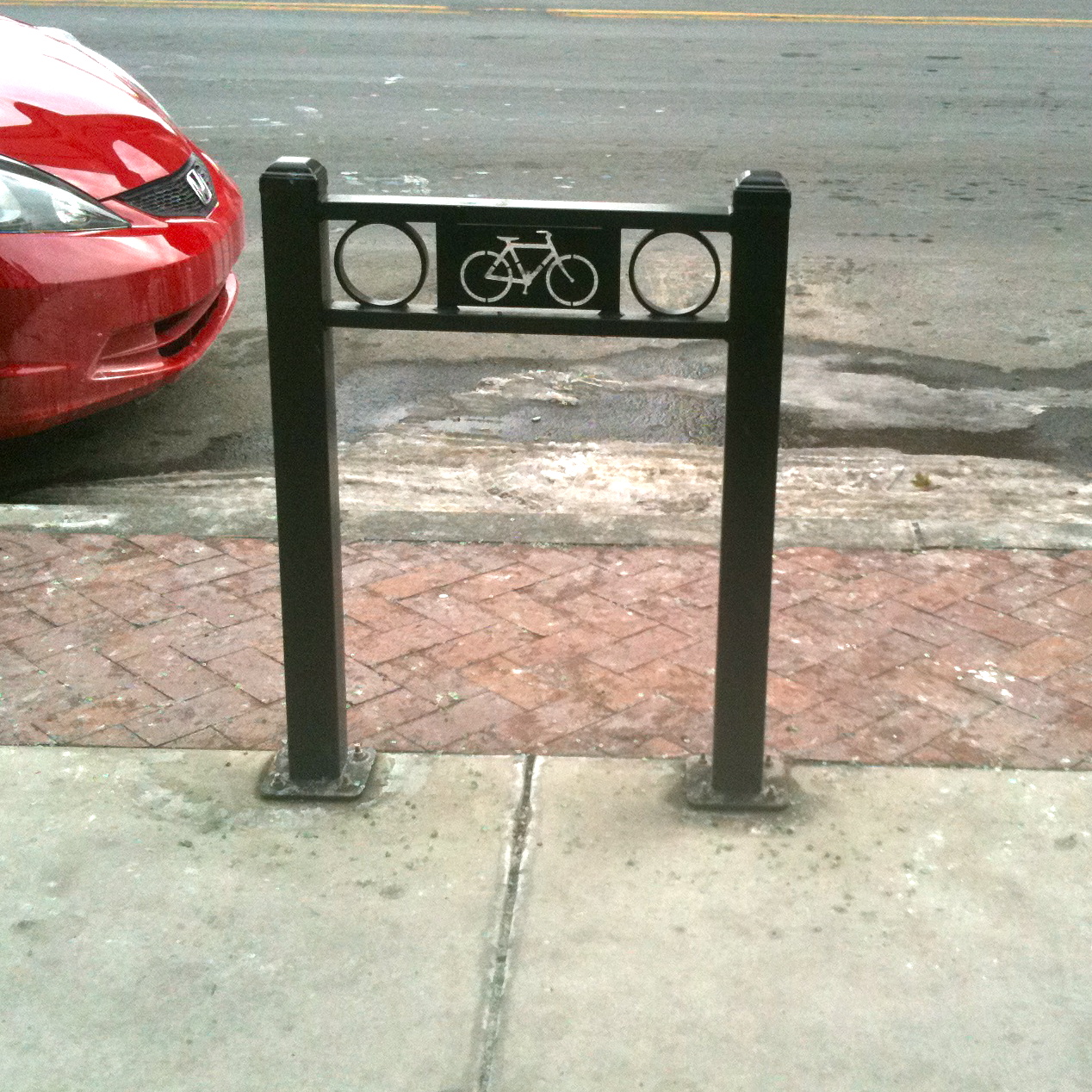
About a block away from Red Privet offices, on Chestnut street right outside of the “Olewine’s Meat & Cheese House” in downtown Harrisburg is this great bike rack. I like the cut out image of a bike. Sometimes I see bike racks and they are just plain metal tubes that might be and might not be legal to lock your bike to. This design work well because it clearly is labeled for a bike with the cut out image of a bike.. It also recalls an old hitching post for horses.
My notes from “The Playwork Primer” by Penny Wilson
February 26th, 2011The Playwork Primer by Penny Wilson (Alliance for Childhood 2009)
4 Sentence Summary
Playwork comes from serious professional efforts to support children’s playing. The first efforts were with adventure playgrounds in London which developed the profession of playworkers . Playworker support children’s play that is freely chosen, personally driven and intrinsically motivated. Play is important for children and youth and it’s deprivation has serious consequences.
(p5)
It may be helpful to think of an adventure playground as a Gesamtkunstwerk, or “total artwork,” a space and time where all one’s senses are engaged.”
(p6)
The first bomb-site adventure playgrounds were staffed by “wardens.” … One of the first adventure playground wardens, Pat Turner, wrote a book about his time as Lollard playground that he called Something Extraordinary.
Makes me think if something like this might be useful or valuable for Iraq or Afghanistan and how children are playing there.
(p7)
“A good playworker will have resources as readily available as a first aid kit so that if and when children come and ask for face paiting or a deck of cards these materials or their approximations can be furnished to them. What a playworker does not do is schedule events and say, “This afternoon we will be face painting and playing canasta. Then you will do 30 minutes of “keep fit” and then have a healthy snack.” This contaminates the play frame and corrupts the freely chosen, personally directed, and intrinsically motivated playing that children must experience.”
Makes me think of how I can do something like this in the workspace and as manager/leader.
(p11)
“The theories of complexity provide some interesting metaphors for understanding playwork. Arthur Battram describes an ideal state for a play setting by likening it to a wave. Before the wave breaks, there is stasis, order. After the wave breaks, there is turbulence and chaos. At the curl of the breaking wave there is a delicate balance between order and chaos. … Look at the curl of the wave, which is where we surf because that is where the power is … It is a framework for creativity.”
I want to surf!
(p13-14)
“Loose parts (Nicholson’s theory of loose parts) do exactly the opposite of battery-powered toys that require the child only to push a button to send the toy into an ecstasy of beeping and flashing a tinny music. Such toys do the playing while the child is reduced to the passive role of an audience.”
(p16)
“Have the best time that you can while you are here and try not to hurt yourself or anyone else.”
(p28)
“We are poor indeed if we are only sane.” by D.W. Winnicott
(p30)
“He terms the space between the GEM and the child, in which this playing occurs, the “transitional or potential space.” It is a space where things can happen that are “me” and “not me.”
This is bodystorming for me.
Brand to Customer Loyalty
February 25th, 2011How could companies be loyal to their customers? Call it “Brand-to-customer Loyalty.”
“Brick and Mortar Loyalty has meant customer loyalty to brick and Mortar, it has never had to mean brick and mortar loyal to consumer” – Chris Hall
Loyalty is shorthand for repeat usage and also an element of having a relationship
Loyalty in the sense of the business “celebrating” that they know the customer. Perhaps even giving them precedence over a new customer.
Loyalty might mean giving them special rights that new customers might not have such as a discount based on number of years as customer.
Loyal Customers are Happy Customers
One way to make happy customers might be to be “loyal” to customers. I know we usually think about customers being loyal to a company or to a brand. What would it mean if a brand was loyal to a customer?
A real world example at our local Mexican Grocery Store
They know us. We know them. Not just the cashiers. I mean, the cashiers, the owners, the cooks in the back and the waitress who serves us in the small little restaurant. They have even offered to extend us a line of credit. Allow us to open an account that we could pay each month.
Loyalty to us: Around the Christmas holiday they gave us a bag of treats. Not just a calendar, but some sodas, some chips, and some cookies, and some . Now we aren’t talking big bucks. But that was nice. And they weren’t giving it out to everyone. I liked that. Made me feel special and I could see they didn’t have a pile of pre-made bags with all the same items that they gave to each person.
See Also
Transform Your Loyalty Program from Bank to Park
Great Signage at the Car Wash
February 24th, 2011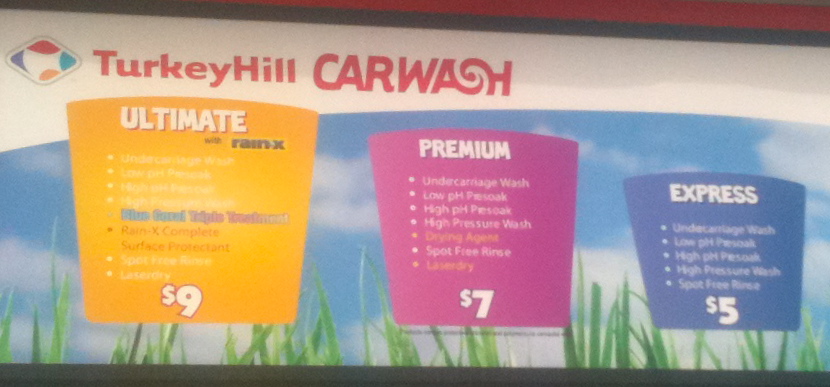
The price element repeats along the horizontal at the bottom.
The number of “feature benefits” builds up from the bottom of each price point. Thus the $9 package offers a taller image area, the $7 with lesser items isn’t as tall, and the $5 package with the least number of items is the shortest. A nice bar chart!